
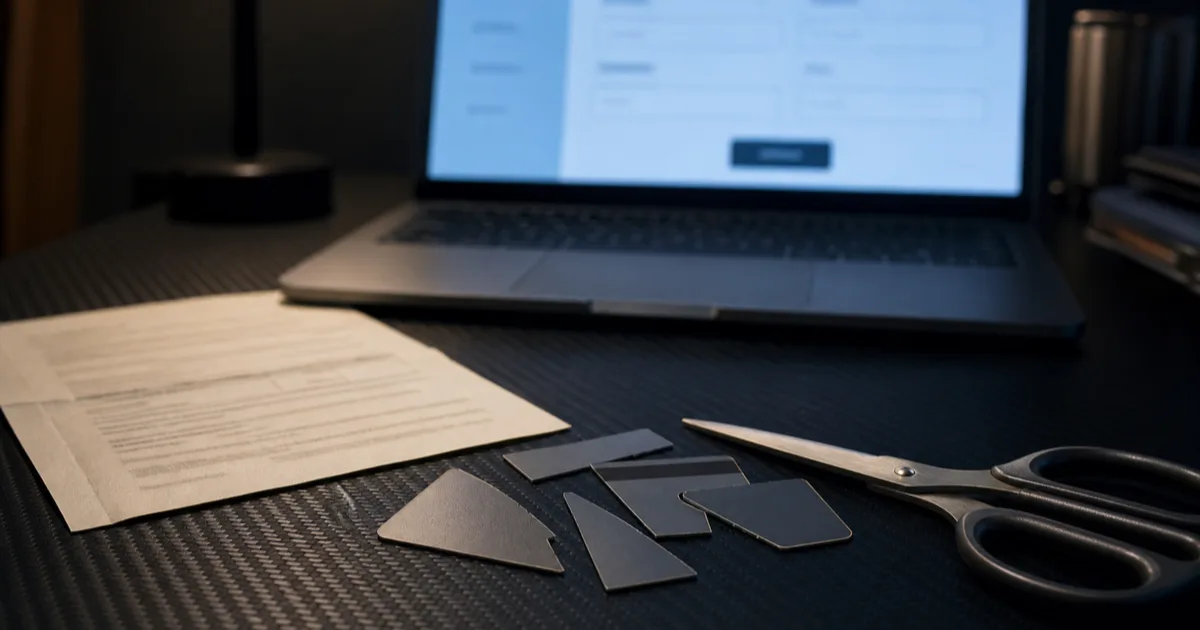
To close an online banking or card account after a breach, freeze or cancel the card using the number on the physical card, change the banking password from a device you trust, then ask the issuer whether you need a new card, a new account number, or a full close — this is not a fake “delete one named bank” page. Last updated: August 2026.
A bank login is not Snapchat. If a password, card, or statement email was in a leak, you lost access, or you want an old product gone, the work is post-breach hygiene: contain money first, then decide whether the whole account should close. We will not pretend a blog post replaces your issuer’s fraud team.
As of 2026, more than 12 billion stolen credentials sit in known datasets. Verizon’s 2024 Data Breach Investigations Report again found stolen or guessed credentials in the large majority of web-application breaches. That is why leftover online-banking passwords get tried automatically — the same pattern as PayPal leftovers.
This page is general information, not legal, tax, or personalised financial advice. Your bank or card issuer’s official instructions win if they conflict with anything here.
Why would you close a bank or card login after a data breach?
- The email on online banking appeared in a breach check
- A card was stored on a shopping site that leaked
- You cannot get into the app, and the SMS goes to an old phone
- An attacker changed the email on the banking profile
- You have a leftover credit-union or store-card login you never use
If this is still the account that receives your pay, you usually lock and replace numbers, not “delete the bank.” Closing a deposit account is for products you are done with, after direct deposits and bills have a new home.
Browse known breaches if you are matching a notification letter to a retailer that stored a card — that letter is about the retailer, and you still call your issuer.
Should you freeze the card, freeze credit, or close the account?
These are different levers:
- Card freeze / cancel and reissue — fastest when the card number may be exposed. The deposit account can stay.
- Online-banking password + 2FA — required when the login may be exposed. Do this even if you keep the account.
- Close the product — savings you no longer use, a store card, a second checking you opened for a move.
- Credit freeze — when identity data may have leaked; it is about new credit, not yesterday’s Visa charges.
Start with contain. People close a checking account in anger and strand a rent payment. Ask the issuer which lever matches what leaked.
If you typed the banking password on a lookalike site, check that password against known leak data, check the link, and follow leaked-password steps for every reuse.
How do you close or replace a bank or card account step by step?
1. Stop the bleeding. Use the number printed on the back of the card or on a paper statement. Report fraud. Ask for a freeze or immediate cancel. Do not use a number from a text.
2. Sign in only on a URL you type (your issuer’s real domain) or in the official app from the real app store. If a page feels off, check it.
3. Change the online-banking password to something unique. Turn on the issuer’s 2FA. Review devices and authorised users.
4. Ask whether you need new account and routing numbers. A new card is not always a new checking number. Direct deposit and bill-pay lists matter here.
5. If you truly want the product closed, say so on the recorded line or in a secure message. Ask about: remaining balance, outstanding authorisations, linked digital wallets (Apple Pay / Google Wallet), and how long old numbers can still be charged.
6. Move automatic payments before the close date. Keep a screenshot of the confirmation.
7. Watch statements for a full billing cycle. Retire the old password everywhere.
Check if your email was exposed → free checker
What should you do before you close a deposit account?
- Update payroll and government benefits
- Update Amazon, utilities, and rent
- Remove the card from wallets and leftover Ubers
- Tell a joint account holder — closing someone else’s access without agreement is how families get hurt
- Check the email that receives statements
What happens to your data after you close a bank login?
Banks keep records for legal and tax reasons. Closing stops a live app and, if they reissue, the old card numbers. It does not pull your name out of a retailer’s breach file.
People-search of your address is a data-broker opt-out job, separate from the issuer.
What if you cannot sign in to online banking?
Call the number on the card. That is expected after a hijack. They will verify you. Do not give a one-time code to a caller who phoned you.
If the phone number on the account is already changed, a branch visit with ID may be required. Frustrating and normal. Do not hire a “bank hacker.”
How do you protect other accounts after the banking login is locked?
Email first — statement inboxes are how attackers reset other sites. Then PayPal and shopping. Use the account security checklist and the delete-account hub.
If a password may have travelled with the banking email, run the password reuse change checklist and the leaked-password steps. For identity data (name, SSN, address), use a credit freeze after an SSN breach. The full order of operations is in what to do after a data breach.
“Your bank closure failed, verify SSN” mail is a phish. Paste URLs into website-check. The FTC’s identitytheft.gov site is the official US starting point if someone is opening credit in your name.
Frequently asked questions
Should I freeze the card or close the whole bank account after a leak?
If a card number or online-banking password may be in a leak, freezing or cancelling that card is usually the first hour’s work. Closing the entire deposit account is a bigger step — new account numbers, direct deposits, and bills. Ask the issuer which option matches what was exposed. This is practical hygiene, not personalised financial advice.
How do I reach the real bank and not a phishing number?
Use the phone number on the back of the physical card, a statement PDF you already have, or the URL you type yourself. Do not call a number from a text that says your account is locked. You can paste suspicious links into a website checker first.
Can I close online banking if I cannot log in?
Yes — that is what phone and branch channels are for. Identity checks will be annoying on purpose. Have a government ID and recent statements. Do not give one-time codes to anyone who called you.
Will closing a bank login remove me from a data breach?
No. Copies of leaked files already exist. Closing or replacing numbers stops a live payment rail. You still want unique passwords on email and a free check of whether that email appeared in known dumps.
Should I freeze my credit reports too?
A credit freeze at the major US consumer reporting agencies is a separate tool when identity data (name, SSN, address) may have leaked. It is not the same as deleting a banking app. The FTC’s identity-theft site explains the official path.
Is this a guide to deleting Chase or Bank of America specifically?
No. Issuers use different apps and scripts. The steps here are the shared order: contain the card, use official contact channels, replace numbers, then decide whether the whole deposit account should close. Your issuer’s published help is the last word.